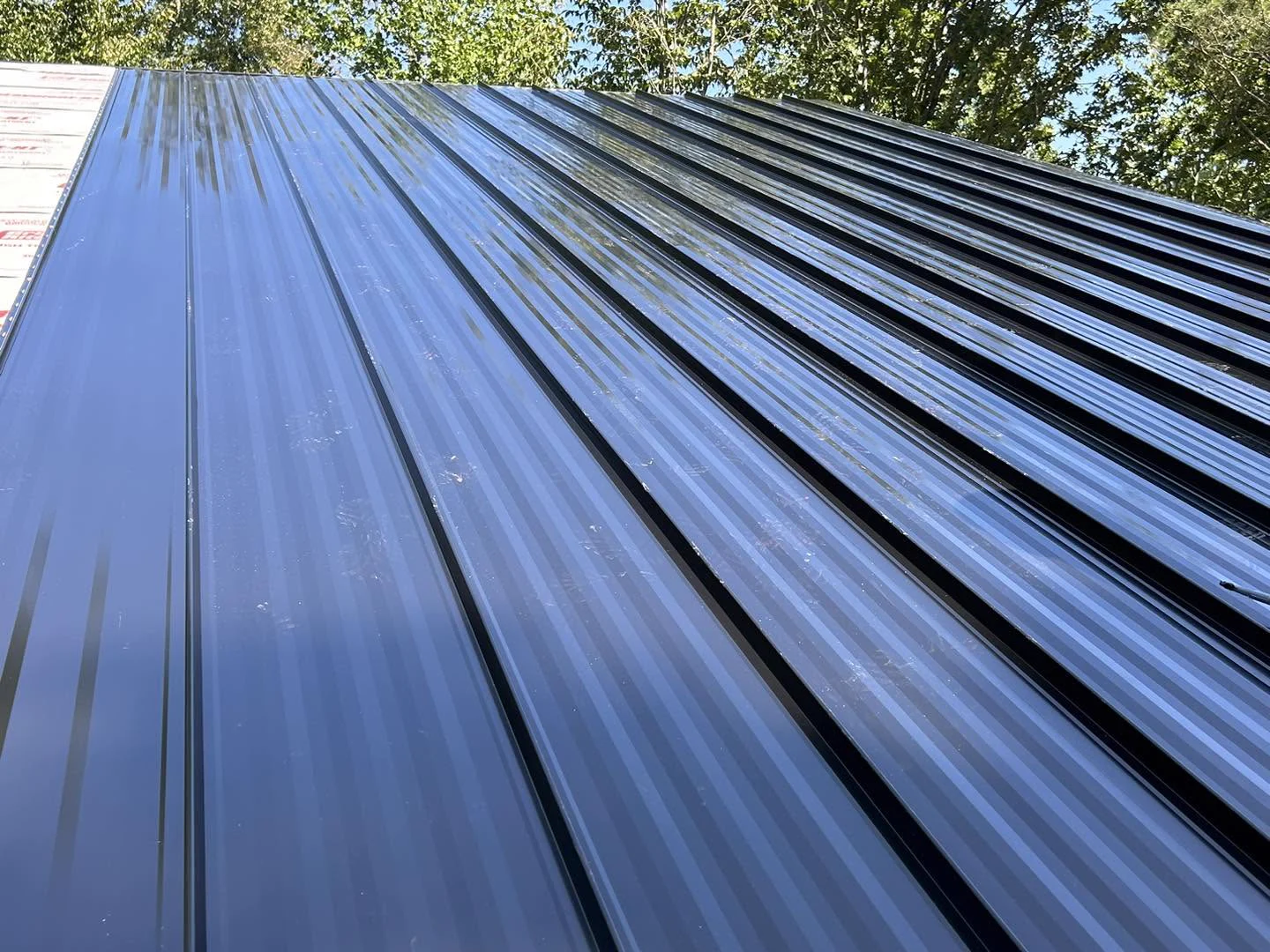
Roofs & walls
16" coverage
24 ga · 26 ga · 29 ga
Rolled on your job site
Standing Seam at a glance
| Detail | Standing Seam |
|---|---|
| Coverage | 16" per panel |
| Seam height | 1½" |
| Seam spacing | 16" on center |
| Fastening | Concealed fasteners · snap-lock |
| Gauge | 24 ga, 26 ga or 29 ga |
| Roof pitch | 3:12 and steeper |
| Use | Roofs & walls |
| Lengths | Cut to your order |
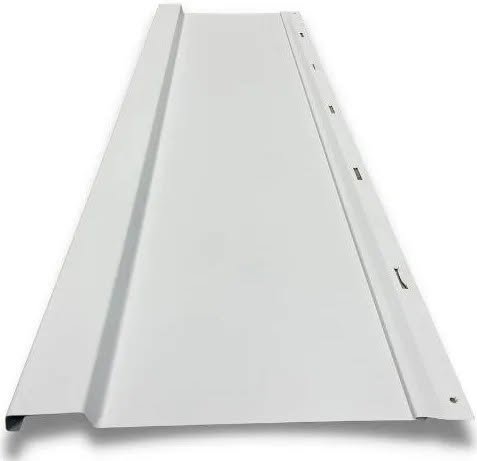
A concealed-fastener, snap-lock profile for roofing and exterior walls
Where it works
- Homes and additions with clean rooflines
- Barndominiums and shouses with metal roofs and walls
- Porch roofs and accent walls that carry the look across the exterior
- Re-roofs where concealed fasteners keep screws out of sight
Before you order
- For roofs 3:12 and steeper, or exterior wall applications
- Have your installer confirm the supports and fastening requirements
- Plan ridge-to-eave lengths around handling and the roof layout
- Budget for a higher cost than exposed-fastener panels
Which thickness?
Lower gauge numbers mean thicker steel. Standing Seam is available in 24, 26 and 29 gauge. Choose the thickness to suit your panel system and project requirements.
| Gauge | Approx. steel thickness | Typical use |
|---|---|---|
| 29 ga | 0.014" | Lighter panels for barns, sheds and budget projects |
| 26 ga | 0.018" | Homes, shops and commercial projects |
| 24 ga | 0.023" | Heavier standing seam panels where a stiffer panel is preferred |
Thickness varies by steel specification. Wind and snow capacity also depend on the complete panel, support and fastening system.
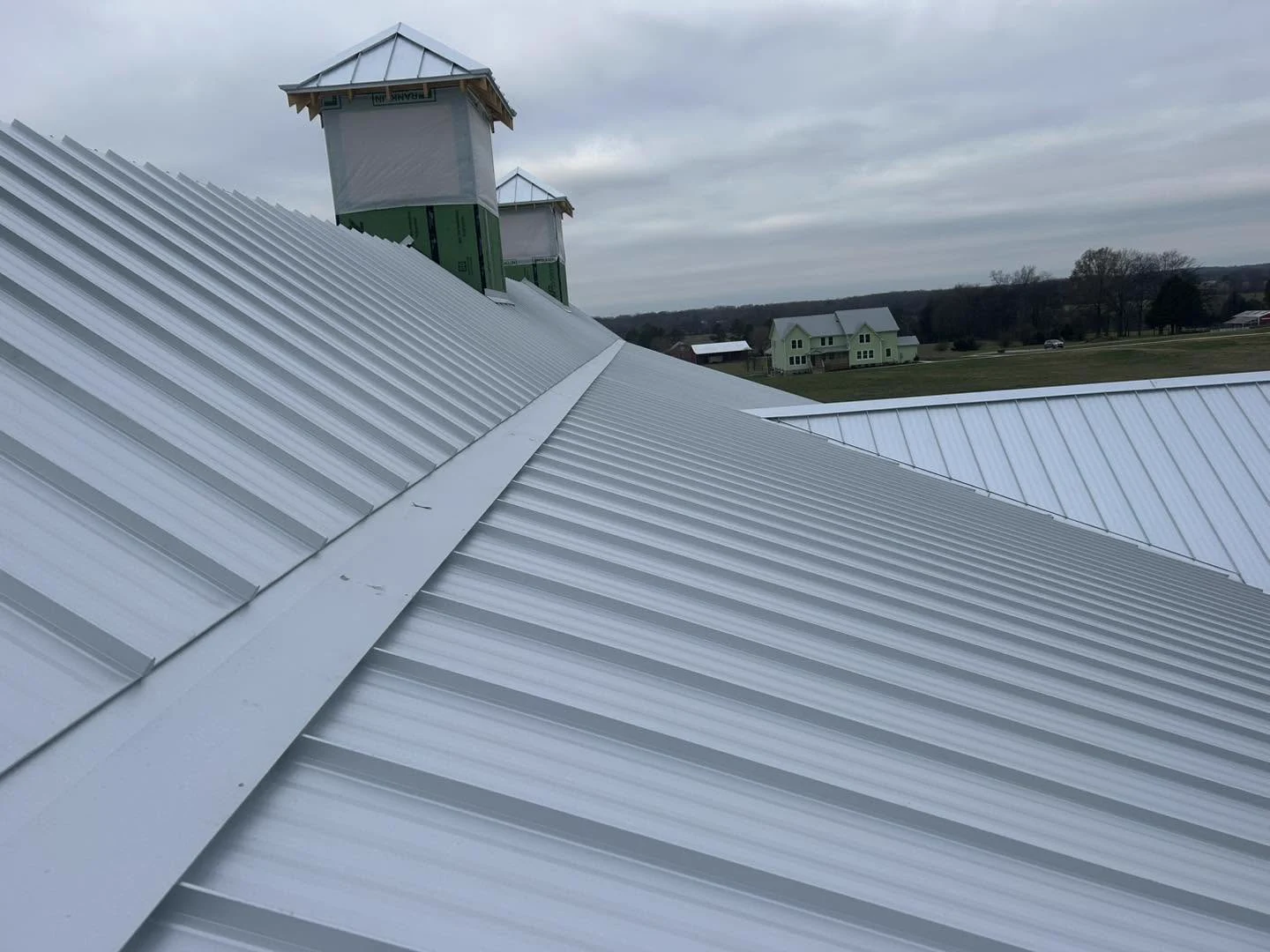
Where roof planes meet
Roof intersections, valleys, and edges need trim and flashing as well as panels. Cupolas and other roof features add details to the material list, so it helps to plan for them before placing your order.
Matching colors, matching trim
Coordinate the roof, siding and trim in the same finish. Order the trim with your panels so we can match the color and coil material.
- Eave trim
- Rake / gable trim
- Ridge cap with Z-closure
- Valley
- Sidewall and endwall flashing
- Transition
Helpful answers
Standing Seam FAQs
Can standing seam be used on walls as well as roofs?
Yes. Standing Seam can be used for roofing and wall panels, including porch roofs and accent walls. Tell us which surfaces you are covering so we can help you plan the panel lengths, fastening details and trim.
What is the difference between 24-gauge and 26-gauge steel?
24-gauge steel is thicker than 26-gauge steel. Both are available for Standing Seam, along with 29 gauge; 24 gauge is the thickest of the three. The right choice also depends on the supports, fastening system and project requirements, so gauge alone does not determine wind or snow capacity.
Can you roll standing seam panels at my job site?
Yes. We can bring our portable roll former to your job site and run Standing Seam panels to the lengths you need. Share the job location and panel lengths when you request a quote so we can discuss access, setup and scheduling.
How does standing seam differ from exposed-fastener panels?
Our Standing Seam uses a snap-lock profile with concealed fasteners. The seams snap together without mechanical seaming, keeping screws out of sight. Ag Panel and R Panel have exposed screws through the panel face. Standing Seam generally costs more; compare the look, roof slope and installation requirements before choosing.
Plan the rest of your project